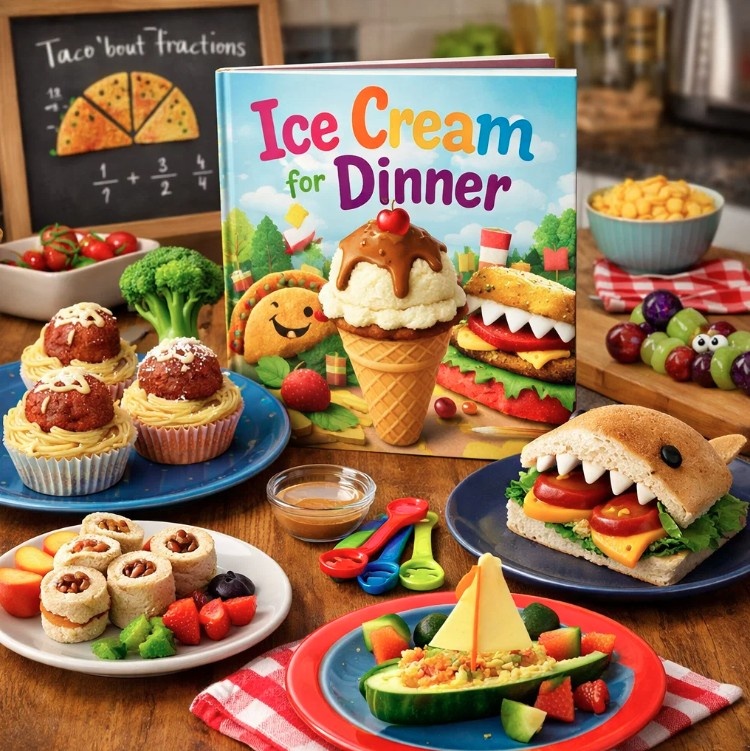
How the Ice Cream for Dinner Book Turns Simple Meals Into Fun Food Lessons?
How can simple meals turn into exciting lessons about food for kids? Children can explore flavors, make choices, and understand balance while having fun with the Ice cream for dinner book. It teaches kids to see food as a tool for learning, not just something to eat. Parents and children can work together, turning mealtime into hands-on lessons. With health education for families at its heart, building healthy habits becomes natural and enjoyable.
Meals as Mini Experiments
Kids love figuring things out, and the book encourages that naturally. Every snack or meal is a small experiment:
- Mix colorful fruits and veggies to see which combinations taste best.
- Compare flavors, sweet, salty, sour to understand balance.
- Try small swaps, like Greek yogurt for ice cream, and see the difference.
This approach makes eating playful, not restrictive. Children become curious rather than cautious, enjoying the learning process without stress.
Ice Cream Isn’t the Enemy
Yes, ice cream appears before dinner sometimes, and it’s intentional. The book teaches kids that sweets aren’t forbidden; they’re part of a bigger picture. Key takeaways include:
- Savoring treats without overeating.
- Understanding how choices affect energy and fullness.
- Seeing food rules as guidelines, not restrictions.
This helps children develop a healthy relationship with treats while still learning moderation.
Growing Together: Parent-Child Bonding Over Health
Learning about food isn’t just for kids. Parents get involved too, sharing discoveries and experiments. This parent-child bonding over health strengthens relationships while teaching practical skills. Examples include:
- Cooking meals together and discussing choices.
- Setting mini-challenges like tasting a new veggie each week.
- Celebrating small victories, like finishing a balanced plate or trying a new recipe.
It’s not just about the food, it’s about connection and guidance that lasts beyond the kitchen.
Adventures with Everyday Foods
The book turns ordinary ingredients into lessons in creativity and problem-solving. Children learn to:
- Create colorful plates that are visually fun.
- Guess flavors blindfolded to sharpen their senses.
- Make decisions independently, fostering confidence.
This method shifts the focus from “eat your veggies” to “explore and enjoy,” which keeps kids engaged.
Tiny Steps, Mighty Changes
Change happens in tiny steps, and the book emphasizes that. Simple wins add up:
- Drinking water instead of sugary drinks.
- Trying one new food each day.
- Moving for 15 minutes instead of staying glued to screens.
These small victories build momentum and give kids a sense of accomplishment, encouraging healthy habits without pressure.
Moving Naturally: Exercise as Play
The Ice cream for dinner book pairs learning with movement. Kids are encouraged to see exercise as fun:
- Dancing to favorite songs.
- Playing tag or obstacle courses outside.
- Mini-challenges like balancing or hopping games.
Activity becomes part of daily life, not a chore, keeping energy levels up and minds engaged.
Confidence Grows From Choice
By experimenting and exploring, children gain confidence:
- They feel empowered to make decisions about food.
- Mealtime stress decreases as kids understand their body’s signals.
- Curiosity replaces fear, making learning about food enjoyable.
The result? Kids not only eat better, they think better about what they eat.
In Closing
The Ice cream for dinner book by Dr. Rick shows that healthy living can be fun, flexible, and empowering. Through health education for families, children gain knowledge, independence, and confidence that lasts well beyond mealtime. Parents also learn practical ways to guide kids without stress or rigid rules. With balance, creativity, and play at its core, he helps families enjoy meals, make smart choices, and build lifelong healthy habits together.