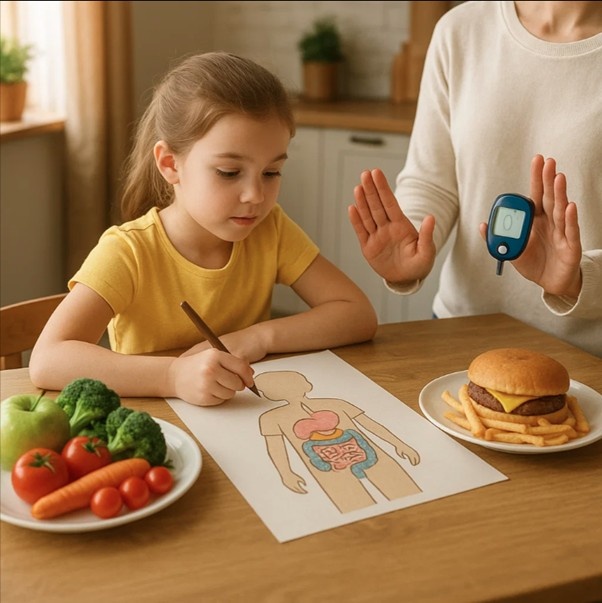
Metabolism Over Menus: Guiding All Kids Toward Childhood Diabetes Prevention
What if preventing childhood diabetes had less to do with what kids eat and more with how their bodies use it? Every parent wants their child to grow healthy, strong, and full of energy. Yet, many families feel trapped by diet charts, calorie counts, and confusing rules. The truth is, lasting health doesn’t come from strict menus; it starts with understanding metabolism. Childhood diabetes prevention begins when children learn how their bodies turn food into fuel, not when they fear certain foods.
Why Metabolism Is More Important Than Menus?
Metabolism is the body’s natural engine; it keeps every child growing, thinking, and playing. When that engine runs well, food becomes a source of power rather than guilt. Two kids can eat very differently and still be healthy if their bodies know how to process energy efficiently.
Healthy metabolism isn’t built by cutting out favourite foods. Instead, it grows stronger through small, consistent habits like:
- Eating when hungry instead of on schedule.
- Staying active through play and movement.
- Including a mix of foods without labelling any as “bad.”
When children learn this, food becomes less stressful and more meaningful. They begin to understand their bodies instead of fearing them.
Building Awareness Instead of Restriction
Children don’t need diets; they need guidance. Teaching them how to eat, not what not to eat helps them build lifelong balance. A child who enjoys pizza on Friday and fruit on Saturday learns that health is about rhythm, not rules.
Parents also play a key role. Through obesity education for families, they can shift focus from body size to healthy habits. Instead of saying, “Don’t eat that,” parents can say, “How does that food make you feel?” This approach encourages curiosity over shame, and understanding over restriction.
Balanced meals and positive conversations about food create confidence, not confusion. That’s how healthy eating becomes a natural part of family life.
Confidence Through Food Freedom
Strict food rules can make children anxious or rebellious. When they learn to trust their bodies, they start making better choices naturally. Health then becomes about awareness, not control.
Simple steps can support this mindset:
- Choose water more often than sugary drinks.
- Play outdoors for at least 30 minutes a day.
- Try new foods without pressure to “eat perfectly.”
When food feels safe and fun, kids grow stronger inside and out.
The Power of Play in Prevention
Movement is one of the simplest tools for childhood diabetes prevention. Physical play like jumping, dancing, or running keeps metabolism active and blood sugar steady. The best part? Kids don’t need to think of it as exercise. If it feels like play, it becomes part of life.
Parents can encourage fun activities by joining in, riding bikes, playing tag, or walking the dog. Shared moments like these do more for a child’s health than any diet ever could.
Bottom Line
Dr. Rick believes that every child deserves the chance to build health through learning, not limits. His Ice Cream for Dinner Program challenges old ideas about “good” and “bad” foods. Instead, it teaches balance, moderation, and body awareness.
He reminds families that prevention doesn’t mean perfection; it means progress. Children thrive when they understand that eating, moving, and resting all work together to create strength and balance.
Childhood diabetes prevention is more than a message; it’s a movement. It’s about helping families replace fear with knowledge and showing every child that health begins with understanding their own body.