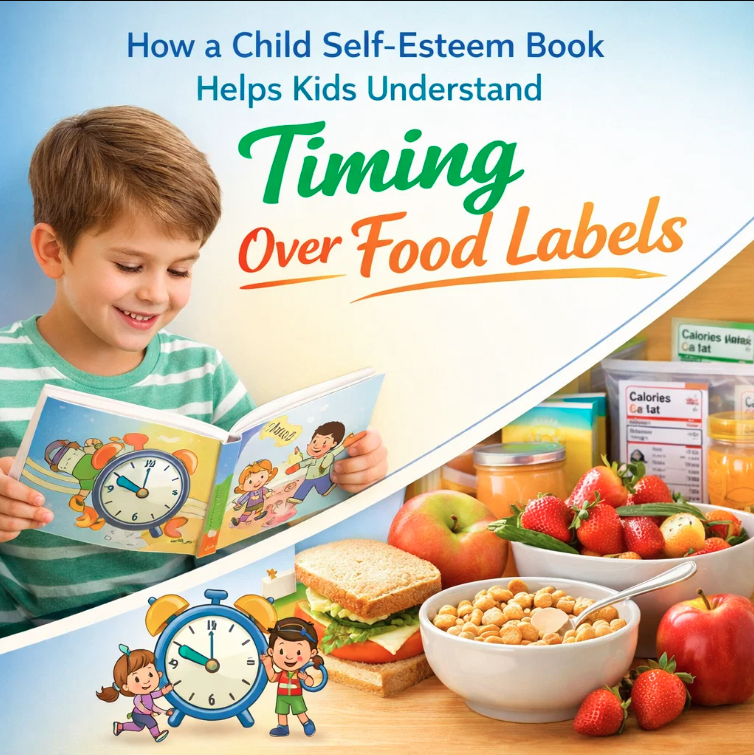
How a Child Self-Esteem Book Helps Kids Understand Timing Over Food Labels?
Kids hear food rules everywhere. Good food. Bad food. Eat this. Don’t eat that. Over time, that noise sticks. It shapes how kids feel about eating and about themselves. Confusion grows fast. So, confidence drops. A better way exists. It starts with timing, not labels.
Parents often ask a simple question. Why does my child feel guilty after eating? The answer usually points to rules that feel heavy. Kids don’t need to fear food. They need clarity. They need trust. They need a system that feels fair and doable.
That’s where a child self-esteem book changes the story. It shifts the focus from food labels to food timing. Kids learn how their body works instead of memorizing rules. That shift feels powerful. It also feels kind.
Food Labels Create Stress, Not Confidence
Food labels sound helpful. In real life, they often backfire. Kids read words like “bad” and “junk.” Then they think they failed when they eat those foods. Shame sneaks in. Confidence slips away.
Also, labels ignore real life. Kids attend parties. Kids eat snacks. Kids enjoy treats. When rules clash with reality, kids feel stuck. Stress follows. So does sneaky eating.
Timing removes that pressure. Kids still eat foods they like. They just learn when to eat them. That feels fair. It feels smart. It builds trust fast.
Clear Rules That Don’t Stress Kids
Timing explains how food works inside the body. It shows kids that proteins, carbs, sugars, and fats all play roles. Nothing feels evil. Nothing feels forbidden.
Kids learn simple ideas like:
- Eat certain foods earlier for energy
- Save treats for times that make sense
- Balance meals without fear
This approach feels calm. Kids don’t panic over choices. They learn patterns. Then they feel proud when they follow them.
That pride feeds confidence. Confidence feeds better choices. The cycle stays positive.
Kids Love Systems That Make Sense
Rules feel heavy. Systems feel fair. A timing-based plan works because kids see results fast. Energy improves. Focus improves. Mood lifts.
Also, the structure feels clear:
- A short plan keeps attention strong
- A break day removes pressure
- Freedom stays part of the process
Kids don’t feel trapped. They feel trusted. That trust matters more than any rule.
Parents notice fewer fights. Meals feel calmer. The parent-child bonding over health grows without stress or lectures.
Self-Esteem Grows When Kids Feel in Control
Kids want control. Food rules steal it. Timing gives it back.
When kids choose when to eat certain foods, they feel smart. They don’t wait for approval. They listen to their body. That builds self-belief.
Also, no food feels off-limits. Kids stop hiding snacks. They stop lying. Honesty returns.
Confidence grows through action, not lectures. Kids feel capable. That feeling sticks far beyond the kitchen.
Timing Works for Every Kind of Family
Some families buy steak. Others buy hot dogs. Timing works for all. Food cost never blocks progress.
The system doesn’t ask for special meals. It doesn’t push pills. It sticks to how the body uses food. That keeps it fair and real.
Kids learn that success doesn’t depend on money. It depends on understanding. That lesson boosts self-worth.
Also, shared learning supports parent-child bonding over health across different homes and routines.
The Sweet Trick: Ice Cream That Teaches Balance
Ice cream plays a smart role. It breaks fear. It removes obsession. Kids stop seeing treats as prizes.
Eating ice cream before dinner feels shocking at first. Then it makes sense. Kids relax. Overeating drops. Balance returns.
That lesson sticks. Kids stop chasing forbidden foods. They learn moderation without force.
Fun matters. When kids enjoy the process, they stay engaged. Engagement drives results.
Activity Feels Like Play, Not Work
Movement supports timing. It doesn’t feel like a chore. Kids run. Kids play. Screens take a back seat.
Play boosts mood. Mood boosts confidence. Confidence supports better choices.
This mix works because it feels natural. Kids don’t feel judged. They feel supported.
Parents often join in. Laughter replaces tension. That strengthens parent-child bonding over health without pressure.
End Summary
Understanding timing over labels changes everything. Kids stop fearing food. They start trusting their body. A child self-esteem book that teaches timing gives kids tools they can use every day. It supports calm meals, smart choices, and strong confidence. Also, it strengthens parent-child bonding over health through shared learning and trust.
Dr. Rick built this approach to support real families. My work focuses on simple steps, balance, and confidence. Parents and kids learn together without fear. I show that timing matters more than labels. My guidance helps kids feel proud, capable, and supported every step of the way.