How Health Education for Families Turns Everyday Meals Into Learning Moments?
Keeping kids on track with healthy habits can feel like navigating a maze full of tempting choices at every turn. Health education for families isn’t just about teaching children what to eat; it’s about creating meaningful moments at the table. Parents can guide kids through decision-making, showing them how foods affect energy, mood, and long-term wellness. By turning everyday meals into interactive learning experiences, families foster habits that last a lifetime and make nutrition approachable rather than difficult.
Turning Snack Time and Meals into Mini Health Adventures
Children learn best when lessons are practical. Instead of lecturing about calories or nutrients, parents can involve kids in simple decisions. For example:
- Comparing snack options and discussing how each fuels the body
- Letting children choose vegetables for a dinner plate while explaining their benefits
- Encouraging questions about meals and sharing why certain foods support growth
This hands-on approach makes learning natural, relatable, and empowering. Kids feel included and develop confidence in making decisions, which supports lasting healthy habits. Parents also notice a shift in family dynamics, as mealtimes become moments of collaboration rather than conflict.
Turning Healthy Habits Into Play: Fun Without the Rules
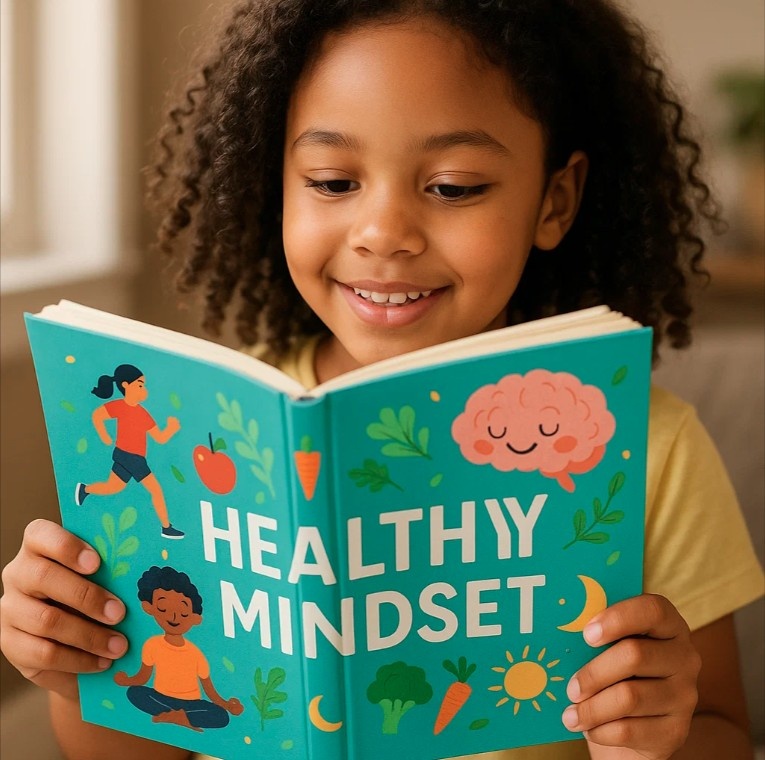
Programs like the healthy mindset book for children show that learning can be playful. Kids understand that balance is key, treats don’t break a routine; they enhance it. Ice cream before dinner or choosing a favourite snack can become a teaching opportunity. For example:
- Explaining portion sizes while enjoying a treat
- Discussing energy levels after different foods
- Connecting colors and textures to nutrients and taste
This method prevents guilt while reinforcing the principle that nutrition is about smart choices, not punishment. Kids learn to enjoy food without fear or shame, making mealtimes positive and stress-free. It also fosters confidence, as children feel empowered to make decisions that benefit their health and well-being.
Turning Mealtime Into a Hands-On Health Lesson
Meals become a classroom when families engage together. Parents can discuss:
- How proteins, carbs, and fats affect strength and focus
- How hydration influences energy during play or study
- Fun experiments like tasting different fruits or comparing textures
These small interactions transform routine dinners into memorable educational moments, building both knowledge and connection. Children begin to recognize how different foods affect their energy and mood. Over time, these lessons encourage lifelong healthy habits while strengthening family bonds through shared learning experiences.
Why Sticking With It Beats Chasing Perfection Every Time?
Children respond best when learning is consistent, not forced. Daily meals offer opportunities for repeated lessons, reinforcing habits naturally. Kids also witness adults making mindful choices, which strengthens modeling behavior. Over time, these simple acts, choosing water, enjoying vegetables, exploring new recipes, develop a mindset where healthy living feels achievable and enjoyable.
Summing Up
Integrating health education for families into everyday life equips children with skills to make confident, balanced choices. Dr. Rick has designed programs that turn meals into practical, engaging learning moments, helping kids develop habits that last. By combining structured guidance, playful approaches, and real-life examples, families can create a supportive environment that encourages curiosity, independence, and joy in healthy living. Parents working alongside children experience measurable progress while building lasting connections. Every meal becomes a chance to teach, learn, and grow together, showing that education and nutrition can go hand in hand.